Your retractable porch screen represents a significant investment in your home’s comfort and functionality. While these screens are designed for durability, neglecting basic maintenance can lead to premature wear, costly repairs, and frustrating malfunctions right when you need them most. The good news? A simple 10-minute monthly routine can extend your screen’s lifespan by years and keep it operating smoothly through every season.
Most homeowners assume retractable screens are maintenance-free until something goes wrong. By then, what could have been prevented with a quick monthly check becomes an expensive service call. This comprehensive guide breaks down exactly what you need to do each month to protect your investment and ensure your retractable porch screen delivers reliable performance for decades.
Understanding Your Retractable Porch Screen System
Before diving into maintenance, you need to understand what makes your retractable porch screen work. These systems consist of several key components: the mesh screen material, the housing unit where the screen retracts, the tracks (top and bottom) that guide the screen’s movement, the pull bar or handle, and the spring or motor mechanism that controls retraction.
The mesh itself is typically made from PVC-coated fiberglass or polyester, designed to withstand outdoor conditions while remaining nearly invisible. The housing protects the rolled-up screen from weather, debris, and UV damage when not in use. The tracks must remain perfectly aligned and clear for smooth operation, while the retraction mechanism requires proper tension to function correctly.
Understanding these components helps you appreciate why each step in your maintenance routine matters. A single grain of sand in the track can cause the screen to jump off course. A buildup of pollen on the mesh can strain the motor. Small issues compound quickly, which is why consistency matters more than intensity when it comes to retractable porch screen care.

The 10-Minute Monthly Maintenance Checklist
Here’s your complete monthly maintenance routine, designed to take no more than 10 minutes but deliver maximum protection for your retractable porch screen.
Step 1: Visual Inspection (2 Minutes)
Start by fully extending your retractable porch screen and examining it in good lighting. Look for any tears, holes, or frayed edges in the mesh. Check the pull bar for cracks or damage. Inspect the housing unit for signs of water infiltration, rust, or debris buildup around the opening.
Run your eyes along the entire length of both tracks, looking for any visible obstructions, bent sections, or alignment issues. If you spot a small tear in the mesh early, you can address it before it becomes a gaping hole. Notice if the screen extends smoothly or if it hesitates at certain points—this often indicates debris in the tracks or a tension issue.
Pay attention to how the screen looks when retracted. If you see wrinkles, bunching, or uneven rolling, the tension may need professional adjustment. While most homeowners can’t adjust tension themselves, identifying the issue early prevents more serious problems down the line.
Step 2: Track Cleaning (3 Minutes)
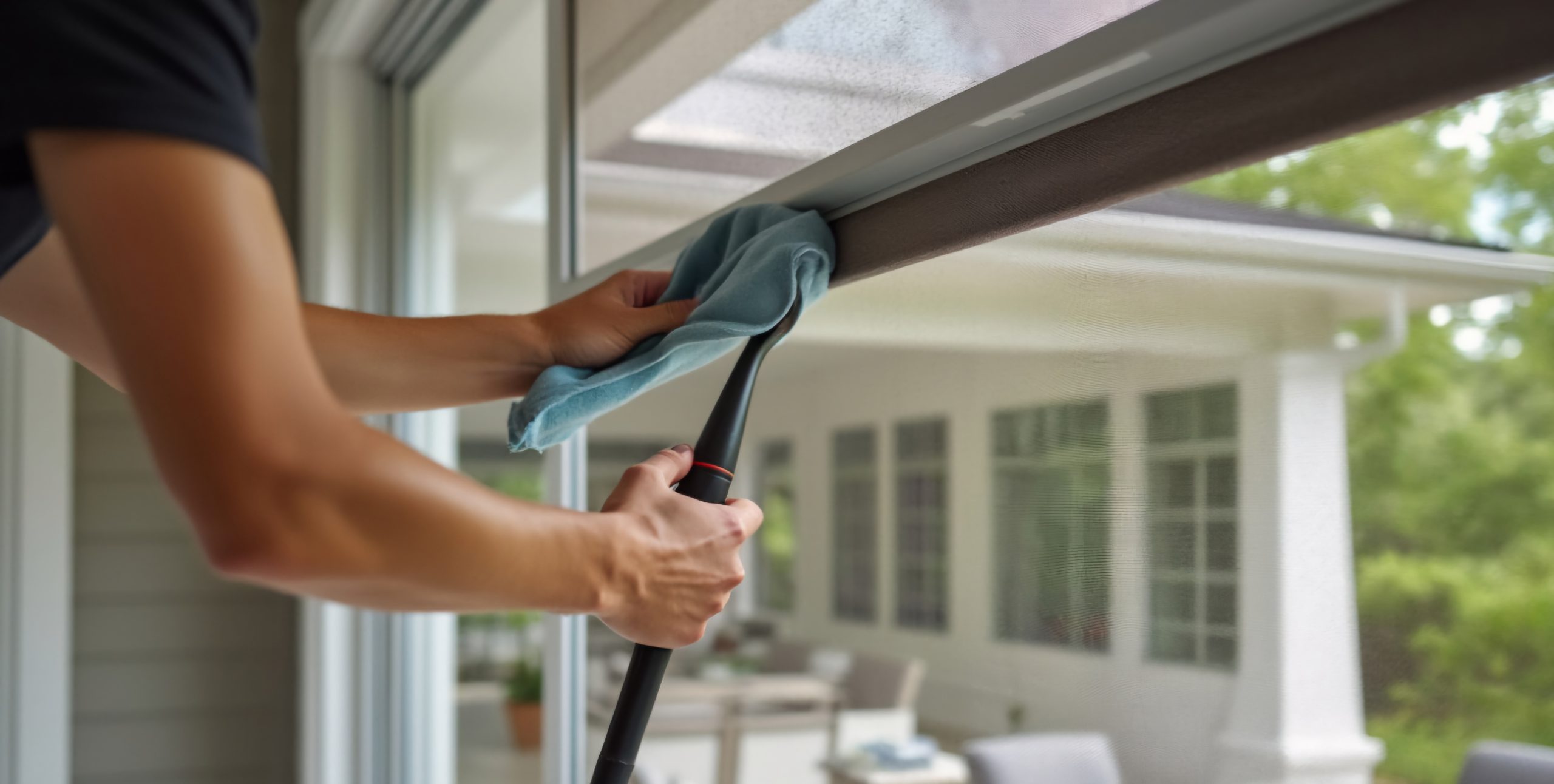
The tracks are where most retractable porch screen problems originate. Remove loose dirt, pet hair, leaves, and small stones from both the top and bottom tracks. Use a soft brush, vacuum with a brush attachment, or even a can of compressed air to dislodge stubborn particles.
For the bottom track, which bears the brunt of foot traffic and debris, use a damp cloth to wipe down the channel after removing loose material. Never spray cleaning solution directly into the track—spray it onto your cloth first, then wipe. Avoid harsh chemicals or abrasive cleaners that can damage the powder-coated or anodized finish.
The top track collects dust, pollen, and cobwebs over time. While it might seem less critical, a clean top track ensures the screen glides smoothly without catching or binding. If you live in a high-pollen area or near construction, you may need to clean tracks more frequently than once monthly.
Step 3: Mesh Cleaning (2 Minutes)
Gently vacuum both sides of the extended mesh screen using a soft upholstery brush attachment. This removes surface dust, pollen, and cobwebs without stressing the material. Work from top to bottom in smooth, overlapping strokes.
For spot cleaning stubborn marks, dampen a soft cloth with mild soap and water, then gently blot the affected area. Never scrub aggressively or use paper towels, which can snag the delicate mesh. If you encounter bird droppings, use a plastic spoon to gently remove the solid material first, then clean the residue with your damp cloth.
Always allow the mesh to dry completely before retracting your screen. Storing a wet screen invites mildew, which can permanently stain the material and create unpleasant odors. On humid days, leave the screen extended for 15-20 minutes after cleaning to ensure it’s fully dry.
Step 4: Lubrication (2 Minutes)
Proper lubrication reduces friction, prevents wear, and ensures smooth operation of your retractable porch screen. Use only silicone-based spray lubricant—never WD-40, petroleum-based products, or grease, which attract dirt and can damage screen components.
Spray a light, even coat along the inside and outside of both the top and bottom tracks. Focus on the channels where the screen actually makes contact. After applying lubricant, wipe away any excess with a soft cloth to prevent dripping and dirt accumulation.
Operate the screen several times to distribute the lubricant evenly throughout the track system. You should notice smoother, quieter operation immediately. For motorized systems, consult your manufacturer’s guidelines, but most benefit from monthly track lubrication even though the motor mechanism itself is typically sealed and maintenance-free.
Step 5: Operation Test (1 Minute)
Extend and retract your screen several times, paying close attention to how it feels and sounds. Smooth, quiet operation indicates everything is working properly. Listen for any unusual noises—grinding, squeaking, or clicking can signal developing problems.
Check that the screen retracts fully into the housing without resistance. If it stops short, bunches up, or retracts too slowly, you may have a tension issue or debris problem that requires attention. Conversely, if the screen slams shut too quickly, the tension may be too high.
For manual systems, the pull should feel consistent throughout the screen’s travel. For motorized retractable porch screens, the motor should run smoothly without straining or stopping. Any changes from normal operation deserve investigation before they become serious failures.
Seasonal Deep Maintenance Tasks
While your monthly checklist handles routine care, certain tasks should be performed seasonally to ensure long-term performance of your retractable porch screen.
Spring Preparation
As you emerge from winter and prepare to use your porch more frequently, conduct a thorough inspection of all screen components. This is the ideal time for a deep clean using mild soap and water on both the mesh and housing. Check for any damage that winter weather may have caused, particularly in areas exposed to snow, ice, or freezing temperatures.
Test the full range of motion and address any issues before peak usage season. This is also an excellent time to trim back any overhanging branches or vegetation that might contact the screen or deposit debris on your porch. Many homeowners schedule professional servicing in spring to address any repairs discovered during winter storage.
Fall Storage Preparation
Before winter arrives, clean your retractable porch screen thoroughly and ensure it’s completely dry. If you live in an area with harsh winters, consider keeping the screen retracted throughout the cold months to protect it from ice, snow, and extreme temperature fluctuations.
Some homeowners in severe climates choose to have their screens professionally removed and stored. While this isn’t necessary for most quality systems, it’s worth considering if you experience heavy snowfall or extended periods of freezing temperatures. At minimum, ensure the housing unit is securely sealed and that no water can infiltrate and freeze inside.
Common Problems and How to Prevent Them
Understanding common retractable porch screen issues helps you prevent them through proper maintenance.
Screen Won’t Retract Fully
This is typically caused by debris in the tracks, misaligned tracks, or improper tension. Your monthly track cleaning prevents most of these issues. If the problem persists after cleaning and lubricating, the tracks may have shifted out of alignment—a job for professionals since even slight misalignment causes binding.
Leaves, twigs, and dust accumulating in the housing cassette can also prevent full retraction. When extending the screen for cleaning, take a moment to brush out the housing opening to remove any visible debris. This simple step prevents material from being pulled into the mechanism where it can cause jams.
Screen Jumps Off Track
Retractable screens are designed to release from the tracks under pressure to prevent tearing when accidentally pushed. However, frequent track-jumping indicates alignment issues, dirty tracks, or worn rollers. Keep tracks scrupulously clean and properly aligned to minimize this problem.
If your screen frequently pops out of the track during normal operation, don’t force it back repeatedly. This causes additional wear on both the track and the screen edge. Instead, address the underlying cause—usually dirt buildup, track misalignment, or excessive wind pressure.
Screen Operates Too Slowly or Too Quickly
Retraction speed is controlled by spring or motor tension. While tension adjustment typically requires professional service, proper lubrication can often resolve minor speed issues. If your screen suddenly changes speed without any other symptoms, dirty tracks are usually the culprit.
For motorized systems, slow operation might indicate a motor issue requiring professional attention. Battery-powered motors should have batteries replaced according to the manufacturer’s schedule, typically annually, to maintain optimal performance.
Tears and Holes in Mesh
Small punctures can be temporarily patched with screen repair kits, but understand that these are temporary fixes. Retractable screens remain taut when extended, causing patches to separate over time and affecting your view through the screen.
Prevention is far more effective than repair. Keep sharp objects away from the screen area, train pets to respect the screen boundary, and consider installing visibility decals if family members or guests frequently walk into the screen. Many quality manufacturers offer replacement mesh that installers can swap in without replacing the entire system.
When to Call a Professional
While monthly maintenance is straightforward, certain situations require professional expertise. Contact a retractable porch screen specialist if you notice:
- Persistent retraction problems after cleaning and lubricating tracks
- Visible damage to the housing unit or frame
- Tears or holes larger than a quarter in the mesh
- Unusual noises during operation that don’t resolve with lubrication
- Track misalignment or warping
- Motor failure or electrical issues in motorized systems
- Tension problems that affect operation speed
Most manufacturers recommend annual professional servicing, typically performed in spring. During these visits, technicians disassemble the housing to clean internal components, adjust tension precisely, inspect for wear, and address minor issues before they become major problems.
Professional servicing can extend the useful life of a retractable screen by identifying alignment, track, mesh, and motor issues before they become larger problems. A qualified technician can inspect the complete system and provide a written recommendation based on its actual condition.
Products You Need for Maintenance
Keeping your retractable porch screen in top condition requires just a few basic supplies:
Silicone-based spray lubricant specifically formulated for retractable screens. Look for products marketed as “dry” or “greaseless” silicone that won’t attract dust. A single can typically lasts an entire season.
Soft-bristled brush or vacuum with upholstery attachment for removing debris from tracks and mesh. Avoid stiff brushes that might damage the mesh or scratch coated surfaces.
Microfiber cloths for gentle cleaning without scratching or leaving lint. Keep separate cloths for the mesh and the tracks to avoid cross-contaminating with grit.
Mild soap solution made with a few drops of dish soap in warm water. Avoid harsh chemicals, bleach, or ammonia-based cleaners that can degrade the mesh coating or damage the aluminum components.
Compressed air (optional) for blowing out stubborn debris from track corners and tight spaces. This is particularly useful if you live in a dusty environment or near construction.
Most of these items are household basics you likely already own. The specialized silicone spray is the only retractable-screen-specific product you may need to purchase, and it is widely available at hardware stores.
Cost Analysis: Maintenance vs. Replacement
Regular maintenance helps protect a retractable porch screen system by reducing avoidable wear and catching small problems early. Actual service life varies with the system, installation, exposure, use, and care.
Neglect can shorten service life because small mesh damage, track wear, debris buildup, and mechanism problems may worsen when they go unnoticed. Routine inspection and cleaning make it easier to address these conditions before they interfere with normal operation.
Maintenance cannot guarantee a specific lifespan or eliminate every repair, but it can help the screen operate reliably and preserve the system for as long as practical. When service is needed, have the screen inspected before approving repair or replacement work.
Factor in the intangible benefits: consistent bug protection, uninterrupted views, and the convenience of a screen that works every time you extend it. These quality-of-life improvements justify maintenance even beyond the financial calculation.
Environmental Considerations
Proper maintenance of your retractable porch screen has environmental benefits that extend beyond protecting your investment. Well-maintained screens last longer, reducing waste and the environmental impact of manufacturing and installing replacement systems.
Quality retractable screens enable natural ventilation, reducing your reliance on air conditioning and lowering energy consumption during pleasant weather. However, this benefit disappears if your screen is torn or non-functional, forcing you to keep doors closed and AC running.
Using appropriate maintenance products matters environmentally too. Silicone-based lubricants are generally more environmentally friendly than petroleum products. Mild soap solutions break down naturally without introducing harsh chemicals into your local ecosystem.
Consider that extending your screen’s useful life from 7 years to 20 years through proper maintenance prevents substantial waste. The aluminum, mesh, and mechanical components in a retractable porch screen require significant energy and resources to manufacture. Maximizing their service life through minimal maintenance effort represents excellent environmental stewardship.
Special Considerations for Different Screen Types
Not all retractable porch screens are identical, and maintenance requirements vary slightly by type.
Motorized vs. Manual Screens
Motorized retractable screens require all the same maintenance as manual systems, plus attention to the motor mechanism. Check battery life in battery-powered systems and replace according to manufacturer specifications—typically annually. Keep the remote control in good condition with fresh batteries.
For hardwired motorized systems, ensure wiring remains dry and protected. While the motor itself is usually sealed and maintenance-free, the connection points can corrode if exposed to moisture. Most motorized systems should be professionally serviced annually since motor components require specialized knowledge.
Manual screens rely on spring tension for retraction. While you can’t typically adjust this yourself, pay attention to retraction speed changes that might indicate spring wear. These systems are generally more forgiving and require less frequent professional service.
Screen Size Considerations
Larger retractable porch screens, particularly those spanning 10 feet or more, require more meticulous maintenance. The increased span means more potential for track misalignment, and the greater mesh surface area is more vulnerable to wind damage.
If you have an oversized screen, consider increasing your cleaning frequency to every 2-3 weeks during peak pollen season or after storms. These large systems represent significant investments and deserve proportional attention.
Coastal and High-Wind Areas
Homeowners in coastal regions or high-wind areas face unique challenges. Salt air accelerates corrosion, requiring more frequent cleaning and inspection of metal components. During severe weather, always retract your screen to prevent wind damage.
Consider applying a protective coating to metal components if you live near the ocean. Some manufacturers offer specific products designed for coastal installations. Rinse screens with fresh water monthly to remove salt residue that can degrade mesh coatings over time.
Creating Your Maintenance Schedule
Consistency is key to effective retractable porch screen maintenance. Set a recurring monthly reminder on your phone or calendar for the first Saturday of each month. The specific date matters less than maintaining the rhythm.
Pair screen maintenance with another monthly task you already perform—changing HVAC filters, paying bills, or conducting other home maintenance. This association helps cement the habit and ensures you don’t forget.
Keep a simple log of maintenance tasks performed and any issues noted. This documentation proves valuable when warranty claims arise or when explaining problems to service technicians. A small notebook stored near your porch door works perfectly for this purpose.
For seasonal tasks, tie them to specific events: spring maintenance when you put away winter decorations, fall preparation when you winterize outdoor furniture. These natural transition points help you remember seasonal maintenance without additional reminders.
Protecting Your Investment Long-Term
Beyond routine maintenance, several practices protect your retractable porch screen investment over the long term.
Train family members to operate screens gently and properly. Children especially need to understand that screens aren’t designed to be pushed or climbed on. Consider installing decals at eye height when screens are new to prevent walk-throughs until everyone adjusts to having them.
If you have pets, establish boundaries to prevent claw damage. Dogs and cats can quickly destroy mesh screens if they paw or scratch at them. Training and supervision during the initial period helps pets learn to respect the screen boundary.
Keep vegetation trimmed back from screen areas. Overhanging branches drop leaves, sap, and debris that accelerate wear. During storms, branches can strike screens and cause damage. Maintain at least 3 feet of clearance between foliage and screen systems.
Consider seasonal usage patterns. If you use your porch primarily from spring through fall, keep screens retracted during unused months to minimize exposure to weather extremes. This simple practice can add years to your screen’s functional life.
The Bottom Line
Retractable porch screen maintenance doesn’t require special skills, expensive tools, or significant time investment. Your 10-minute monthly routine—inspection, track cleaning, mesh cleaning, lubrication, and operation testing—prevents the vast majority of problems that shorten screen lifespan.
Combine this monthly maintenance with seasonal deep cleaning and annual professional service, and your retractable porch screen will deliver 15-20 years or more of reliable performance. The investment of 2-3 hours annually in maintenance protects a system costing thousands of dollars while ensuring it works perfectly whenever you need it.
Small, consistent efforts always outperform occasional heroic interventions when it comes to home maintenance. Your retractable porch screen is no exception. Establish your routine, stick with it, and enjoy decades of bug-free, breezy outdoor living without the frustration of screen failures or the expense of premature replacement.
Ready to enhance your outdoor living space with professional-grade shade solutions that complement your retractable porch screen? Explore our Motorized Screens service page for comprehensive protection from harmful UV rays and intense Florida heat. Our expert team at Central Florida Awnings combines military precision with 25+ years of experience to deliver shade solutions that last. Call us at (844) 491-4339 to schedule your free consultation and discover how the right combination of retractable screens and exterior sun shades can transform your porch into the ultimate outdoor retreat.